
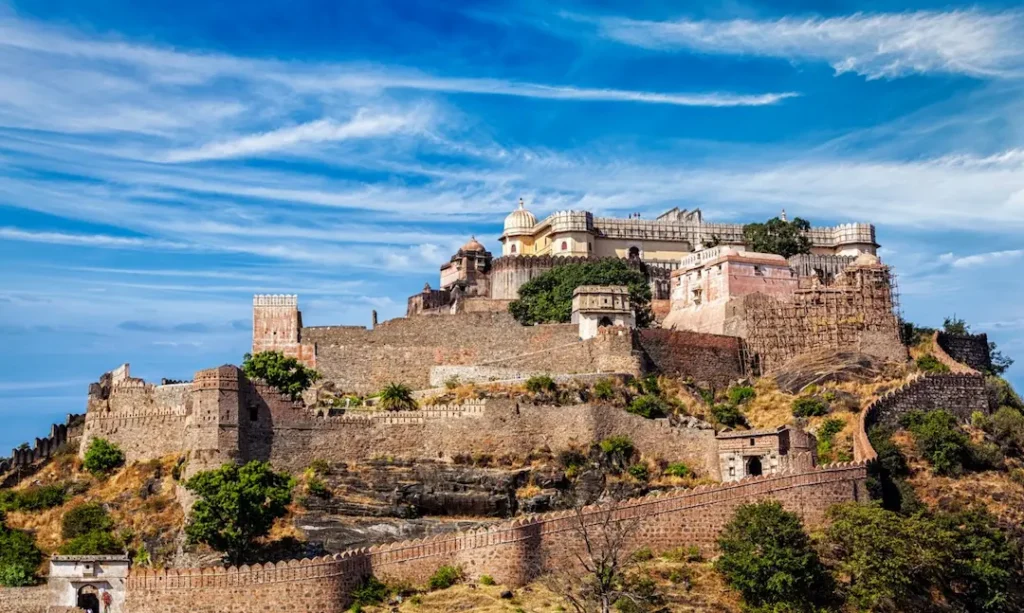
Nestled in the rugged Aravalli Range of Rajasthan, India, the Kumbhalgarh Fort stands as a testament to the architectural brilliance and strategic prowess of the Rajput era. This UNESCO World Heritage Site, often referred to as the “Great Wall of India,” is a must-visit destination for history buffs, architecture enthusiasts, and nature lovers alike. Join me as we explore the fascinating history, breathtaking views, and cultural significance of Kumbhalgarh.
A Glimpse into History
Built in the 15th century by Rana Kumbha, the ruler of the Mewar Kingdom, Kumbhalgarh Fort was designed to be an impregnable fortress. Its massive walls stretch over 36 kilometers, making it the second-longest continuous wall in the world after the Great Wall of China. The fort was constructed to serve as a refuge for the rulers of Mewar during times of war, and it successfully withstood numerous invasions over the centuries.
The fort’s strategic location, perched at an elevation of 1,100 meters above sea level, provided a commanding view of the surrounding landscape, making it nearly impossible for enemies to launch a surprise attack. Within its walls, the fort houses over 360 temples, palaces, and gardens, each narrating a story of its glorious past.
Architectural Marvels
Kumbhalgarh Fort is a masterpiece of Rajput architecture, blending both Hindu and Mughal styles. The fort’s main entrance, known as the Ram Pol, is adorned with intricate carvings and sculptures, showcasing the craftsmanship of the era. As you walk through the fort, you’ll encounter several notable structures:
- Badal Mahal (Palace of Clouds): Perched at the highest point of the fort, this palace offers panoramic views of the surrounding Aravalli hills. The palace is divided into two sections, the Zanana (women’s quarters) and the Mardana (men’s quarters), and is adorned with beautiful frescoes and murals.
- Kumbha Palace: This is the birthplace of the legendary warrior king Maharana Pratap. The palace is a fine example of Rajput architecture, with its ornate balconies, courtyards, and intricately designed rooms.
- Temples: The fort is home to several ancient temples, including the Neelkanth Mahadev Temple, dedicated to Lord Shiva, and the Jain Temples, which are adorned with exquisite carvings and sculptures.
The Great Wall of India
One of the most striking features of Kumbhalgarh Fort is its massive wall, which is often compared to the Great Wall of China. The wall, which is 15 meters thick in some places, was designed to protect the fort from invaders. Walking along the wall, you can imagine the countless soldiers who once stood guard, keeping a watchful eye on the horizon.
The Kumbhalgarh Wildlife Sanctuary
Surrounding the fort is the Kumbhalgarh Wildlife Sanctuary, a haven for nature enthusiasts. Spread over 578 square kilometers, the sanctuary is home to a diverse range of flora and fauna, including leopards, sloth bears, wolves, and over 200 species of birds. A safari through the sanctuary offers a chance to witness the region’s natural beauty and spot some of its elusive inhabitants.
Light and Sound Show
To truly immerse yourself in the history of Kumbhalgarh, don’t miss the light and sound show held every evening. The show narrates the fort’s history, bringing to life the tales of valor, love, and sacrifice that have shaped its legacy. The play of lights against the fort’s ancient walls creates a mesmerizing experience that transports you back in time.
Best Time to Visit
The best time to visit Kumbhalgarh is during the winter months, from October to March, when the weather is pleasant and ideal for exploring the fort and its surroundings. The monsoon season, from July to September, also offers a unique experience, as the lush greenery and mist-covered hills add to the fort’s mystical charm.
How to Reach
Kumbhalgarh is well-connected by road and is approximately 85 kilometers from Udaipur, the nearest major city. The nearest airport is Maharana Pratap Airport in Udaipur, and the closest railway station is in Falna, about 80 kilometers away.
Conclusion
Kumbhalgarh Fort is more than just a historical monument; it is a symbol of Rajasthan’s rich cultural heritage and the indomitable spirit of its people. Whether you’re a history enthusiast, an architecture lover, or simply someone seeking a peaceful retreat amidst nature, Kumbhalgarh has something to offer everyone. So, pack your bags and embark on a journey to this majestic fort, where every stone has a story to tell.
Have you visited Kumbhalgarh Fort? Share your experiences and thoughts in the comments below!